Patreon
Improving creator discovery on Patreon
Patreon's search-driven discovery system only worked if you already knew who you were looking for. In a 5-week bootcamp project, my collaborator Andrew and I redesigned the creator discovery experience to help casual browsers find creators they'd actually want to support.
Problem
Most people discover creators everywhere but Patreon
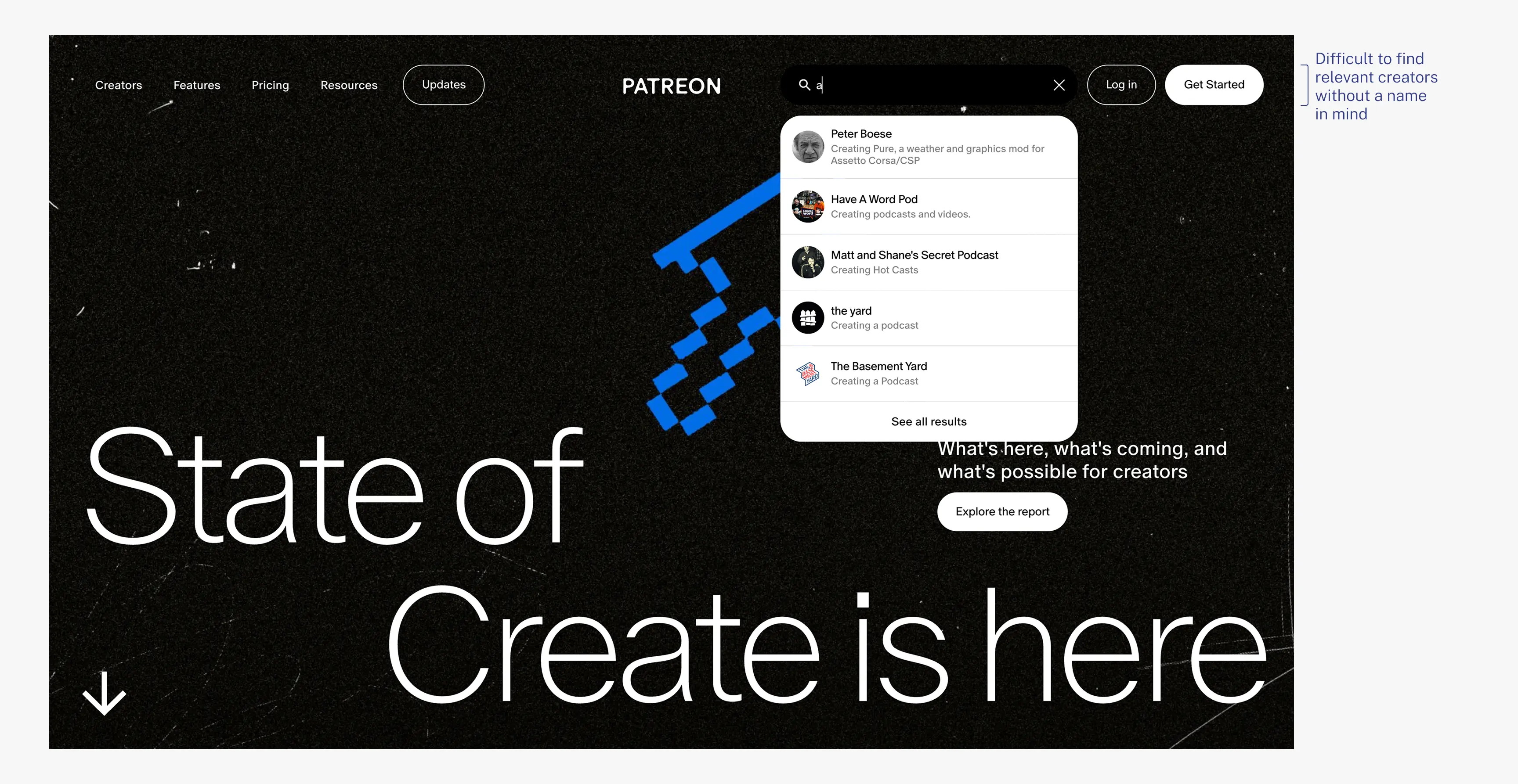
Patreon's discovery experience had two friction points: a search bar that worked best when you already had someone specific in mind, and browsing features locked behind account creation. Casual users with no specific creator in mind had little guidance on where to start.
Solution
From insight to interface
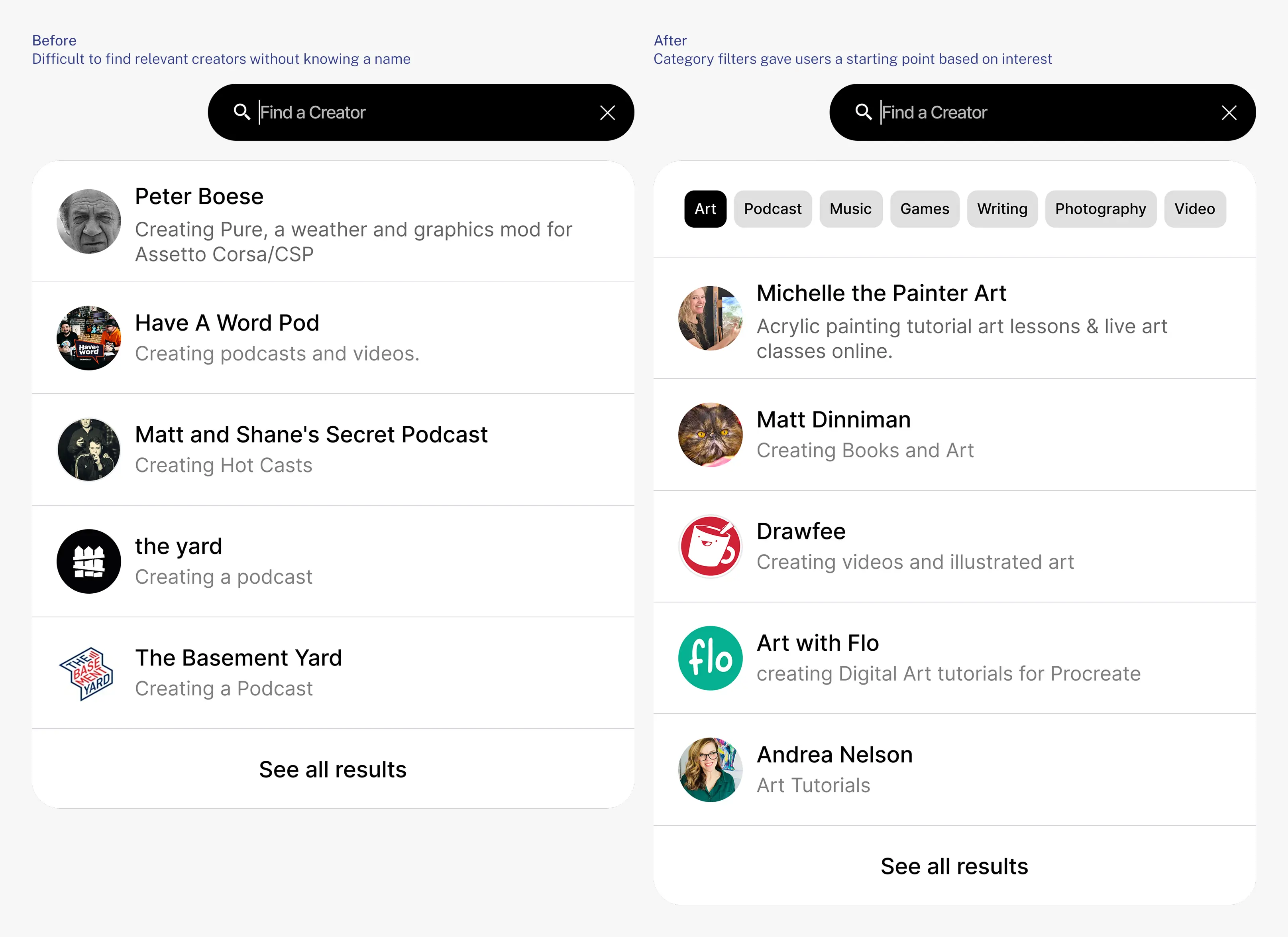
Research showed people needed a reason to stay on Patreon before they knew who they were looking for. My solution was a category filter system that gave casual browsers an entry point by interest rather than name. Art, Podcast, Music, Games, Writing, Photography, Video, chosen based on Patreon's most popular content areas, gave users a starting point that didn't require prior knowledge of any specific creator.
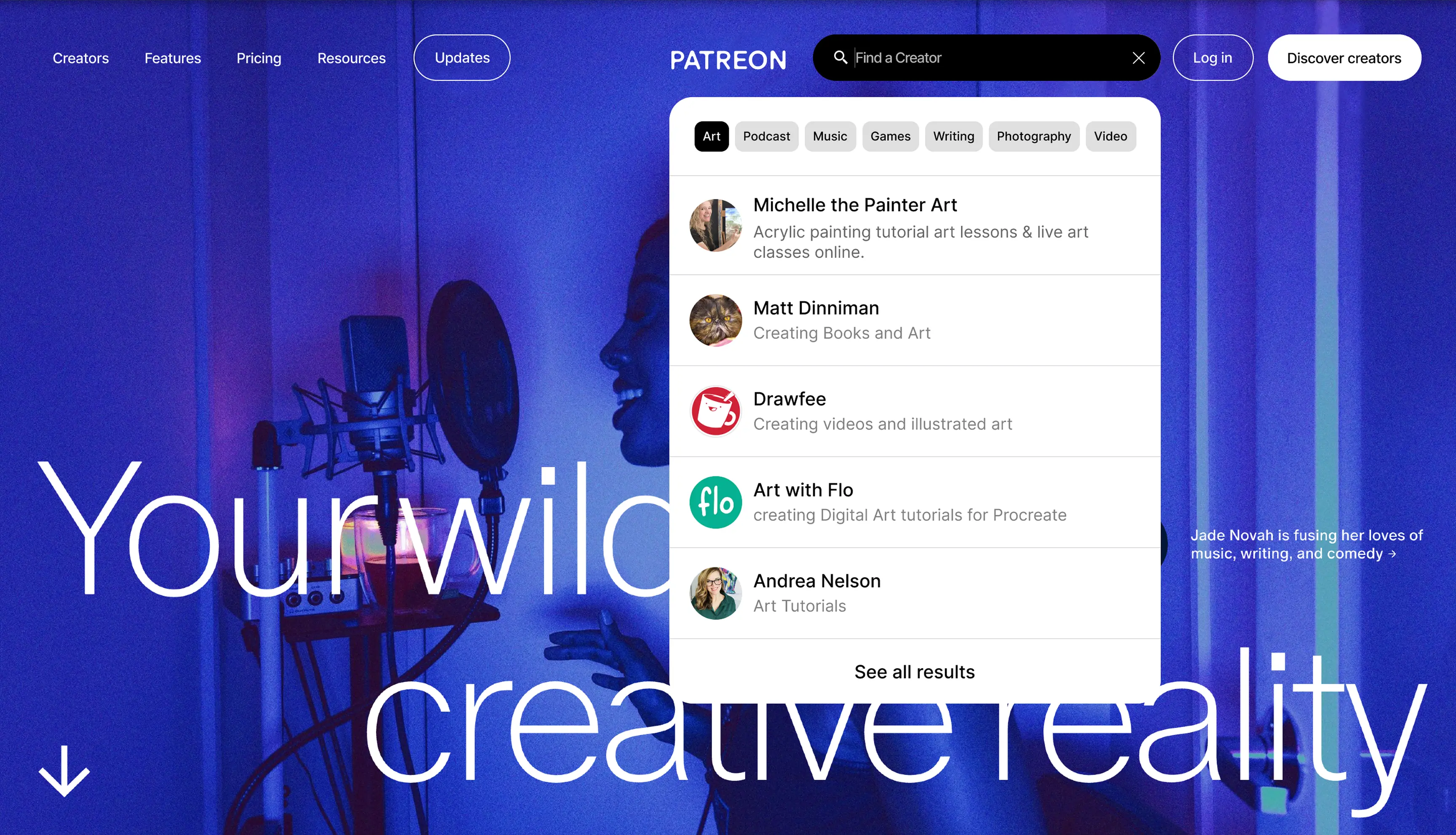
Category filters create a path to discovery for users who don't know where to start
Research
People don't search for creators. They stumble onto them.
“I don't actively search for new creators on Patreon. I find people I like elsewhere, then decide if I want to support them.”
Most people discovered creators on other platforms first and several weren't even familiar with Patreon itself.
What drove the decision to support financially: exclusive content, convenience, trust built over time, community, or practical value like learning a new skill. But with so much free content available, paid content had to clearly justify its cost. Patrons needed to understand what they were getting before they'd commit.
The opportunity was clear: get people to the right creator faster, and make the value of supporting them obvious.
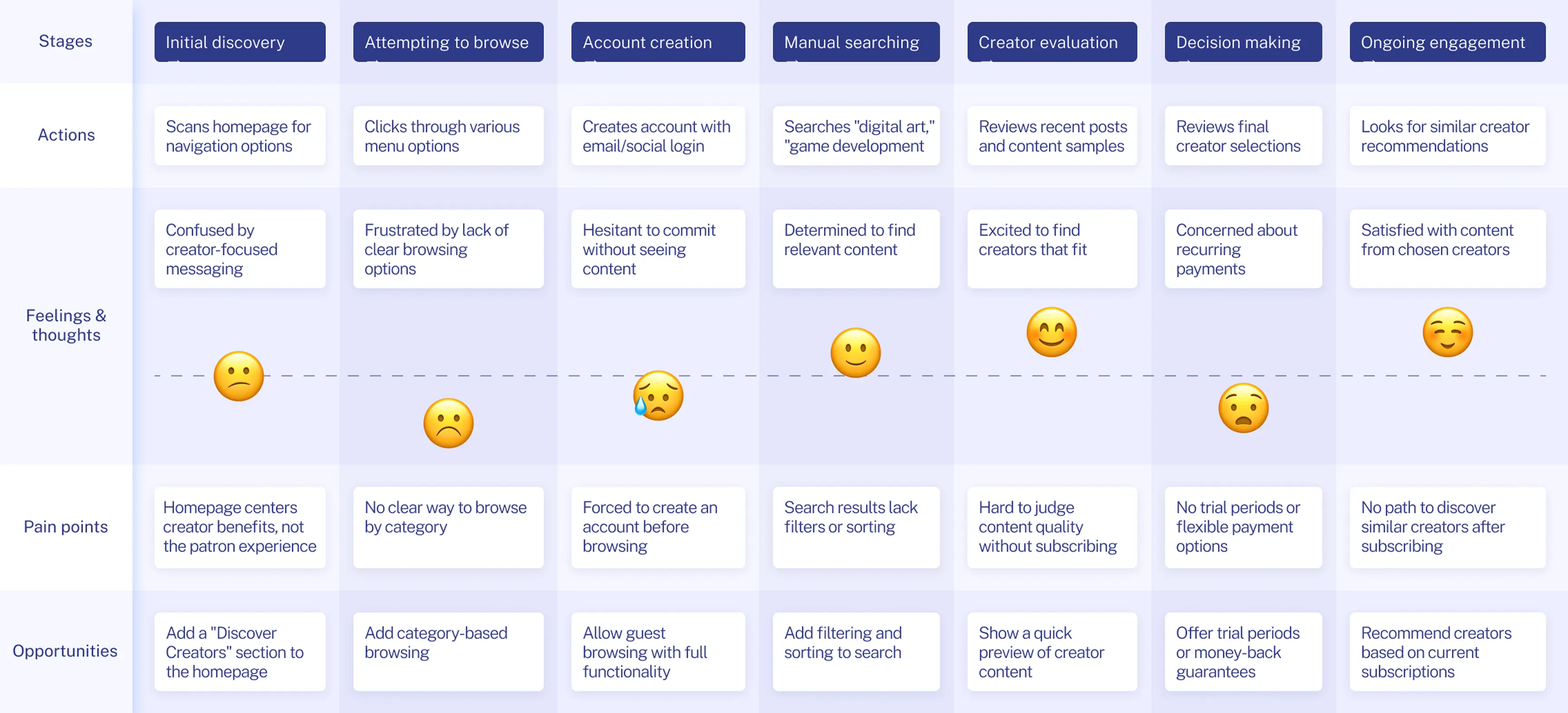
Journey map revealing where discovery friction caused users to disengage before finding a creator worth supporting
Ideation
Browsing shouldn't require a name
Research made clear the problem wasn't search quality, it was that search was the only option. Andrew focused on a quiz-based approach to match users with creators before they created an account. I focused on category filters, letting users browse by topic so they could explore without needing a specific person in mind. Both directions addressed the same root problem: giving people a reason to stay on Patreon long enough to find someone worth supporting.
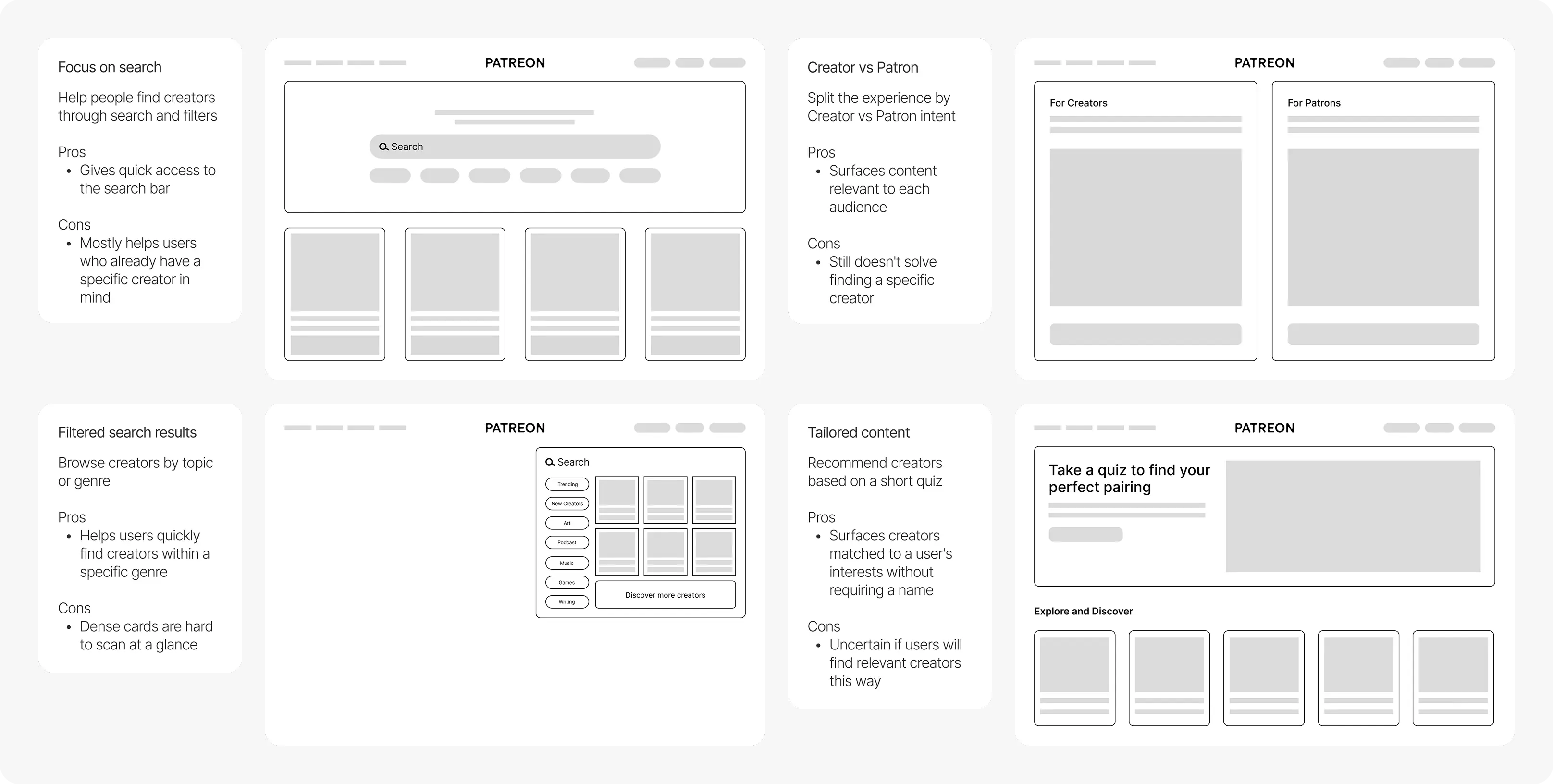
We moved forward with category-based filtering. It let people browse by interest without needing a name in mind, directly solving the mental model gap research surfaced.
Iteration
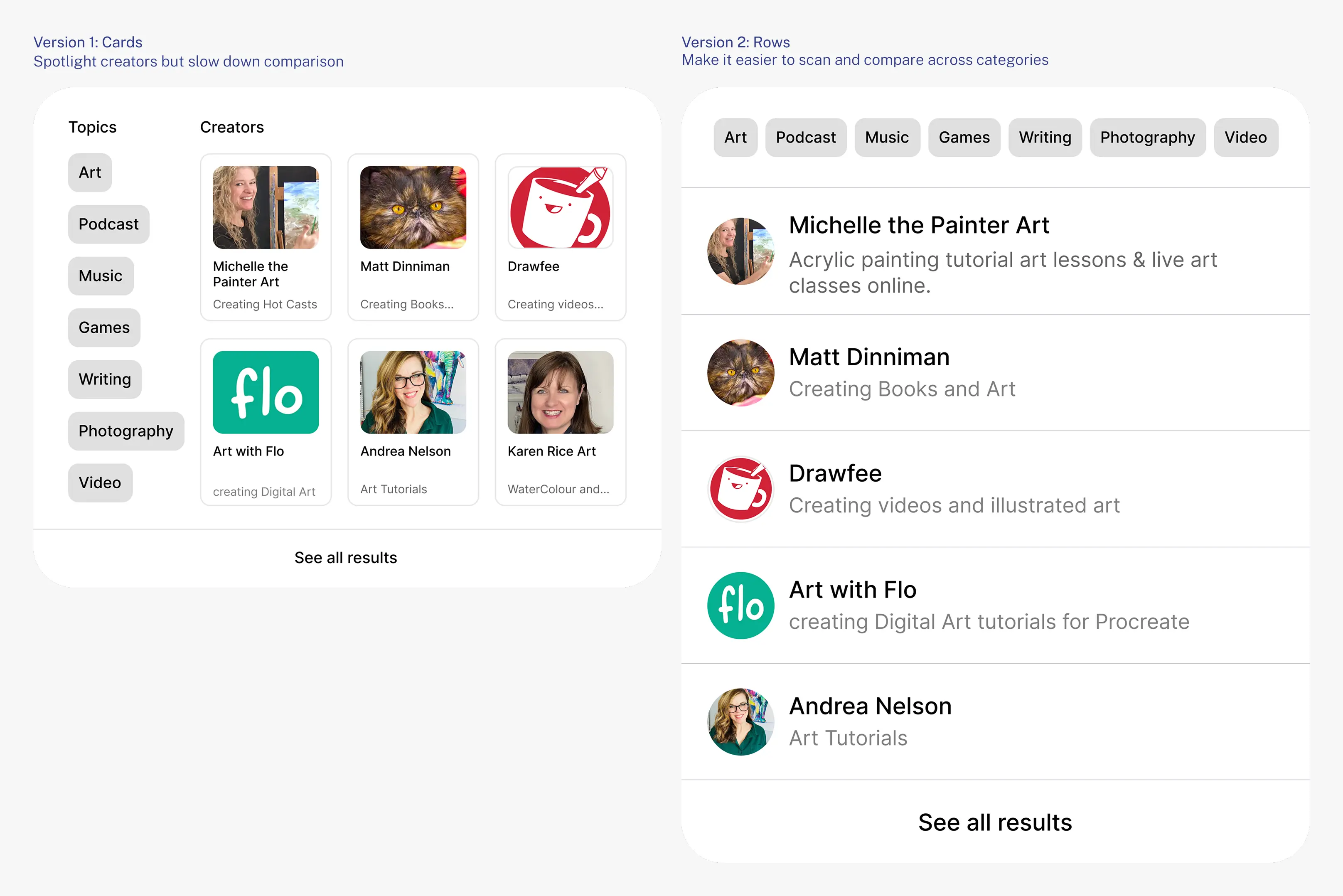
Cards vs rows
Early designs used a card grid to spotlight individual creators. Testing showed cards made it harder to compare options quickly. Switching to a row-based layout gave each creator more horizontal space, improved text legibility, and made scanning across categories faster.
Results and impact
A discovery experience people actually wanted to use
Every participant said the new features would make them more likely to explore creators directly on Patreon. 6 out of 7 said they would be more likely to financially support a creator they found through the new system.
If implemented, impact could be tracked through higher time spent browsing, increased conversion from browsing to subscribing, and more first-time subscriptions to emerging creators.
Reflection
Why people actually pay
Research showed the real barrier wasn't finding creators, it was understanding why to pay for one. Exclusivity, trust, community, and real value all mattered more than search functionality ever could. That reframing changed how I think about discovery design entirely.